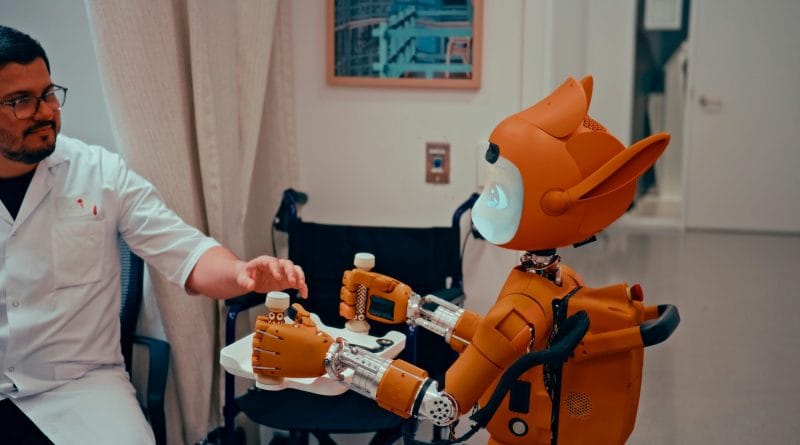
AI Doctors: How Hospitals Are Saving Lives in 2026
Let’s face it: nobody likes going to the hospital. The waiting rooms are crowded, the anxiety is high, and doctors are often overworked and exhausted.
But in 2026, a quiet revolution is happening in the corridors of clinics worldwide. AI doctors and smart algorithms aren’t replacing human physicians; they are giving them superpowers.
From predicting heart attacks before they happen to performing surgery with microscopic precision, here is how AI is healing the world.
1. Detecting Cancer Years in Advance
The biggest enemy in medicine is time. Usually, by the time a patient feels sick, the disease has already spread.
New AI systems are changing the game. By analyzing X-rays and MRI scans, AI doctors can spot anomalies invisible to the human eye. According to a report by The Lancet Digital Health, AI algorithms are now detecting early signs of breast and lung cancer up to two years earlier than traditional methods.
- Speed: AI scans thousands of images in seconds.
- Accuracy: It reduces “false positives,” saving patients from unnecessary stress.
- Availability: It works 24/7, never getting tired or distracted.
2. The Rise of Robotic Surgery
Imagine a surgeon’s hand that never shakes. That is the promise of AI-assisted robotics.
Systems like the Da Vinci robot allow surgeons to operate with incredible precision. The human controls the robot, but the AI doctors software stabilizes the movements and provides a 3D magnified view of the patient’s body.
This means smaller incisions, less pain for the patient, and a much faster recovery time. Surgeries that used to keep you in bed for weeks now let you go home in a few days.
3. Your Personal Health Assistant
It’s not just about big hospitals. The revolution is in your pocket.
Wearable devices (like smartwatches) are now acting as personal AI doctors. They monitor your heart rate, sleep patterns, and oxygen levels continuously. If the AI detects an irregular heartbeat (arrhythmia), it can alert you and your real doctor instantly, potentially preventing a stroke.
Conclusion: The Human Touch Remains
Does this mean real doctors are obsolete? Absolutely not.
Medicine is not just about data; it is about empathy. A robot cannot hold your hand when you are scared or explain a diagnosis with compassion.
The future of healthcare is a partnership. AI doctors handle the data and the precision, allowing human doctors to focus on what matters most: caring for the patient.