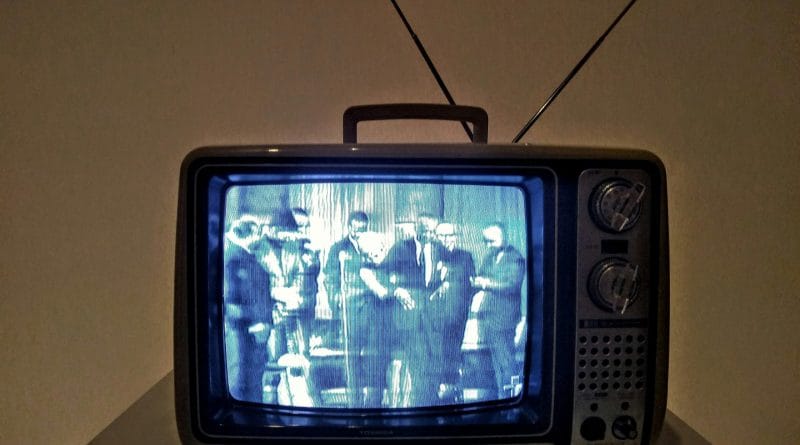
The End of Truth: Deepfakes, AI, and the Chaos of the 2026 Elections
For centuries, the ultimate standard of evidence was simple: “I saw it with my own eyes.” If there was a video of a politician taking a bribe or an audio recording of a CEO confessing to a crime, it was undeniable proof.
In 2026, that standard is dead.
We are living through the first true “Post-Truth” election cycle. The proliferation of Generative AI has democratized deception. Today, a teenager in a basement can create a broadcast-quality video of a world leader declaring war, or an audio clip of a candidate uttering a racial slur, using software that costs less than a Netflix subscription.
Welcome to the era of the Deepfake, where reality is optional and trust is the first casualty.
The Technology of Deception
The leap in technology over the last three years is terrifying. In 2023, AI videos had “tells”—strange hands, unblinking eyes, or robotic voices.
In 2026, those glitches are gone. Tools like OpenAI’s latest Sora update or Midjourney v7 generate photorealistic video that passes the “uncanny valley” test. Voice cloning requires only three seconds of reference audio to create a perfect replica, capturing not just the tone, but the breath, the pauses, and the emotional inflection.
This means that “evidence” can be manufactured on an industrial scale. During this election season, social media feeds are flooded with millions of synthetic clips. The sheer volume makes it impossible for fact-checkers to keep up. By the time a video is debunked, it has already been viewed 50 million times and shared by partisan influencers.
The “Liar’s Dividend”
However, the biggest danger isn’t that we will believe the fakes. It is that we will stop believing the real.
This phenomenon is known as the “Liar’s Dividend.”
Because the public knows that deepfakes exist, bad actors can dismiss genuine evidence as “AI-generated.” If a video surfaces of a candidate actually committing a crime, they can simply shrug and say, “That’s a deepfake created by my opponents.”
This creates a “reality apathy.” Voters, overwhelmed by the inability to distinguish truth from fiction, simply check out. They retreat into their tribal echo chambers, believing only what confirms their bias and dismissing everything else as a digital fabrication.
The Micro-Targeting Nightmare
The threat is not just about mass broadcast; it is about personalization.
In 2026, political campaigns are using AI to generate millions of individualized messages. A voter concerned about gun safety might receive a deepfake audio call from a candidate seemingly threatening to ban all firearms. A voter worried about taxes might see a fake video of the opponent promising to double rates.
These “synthetic psy-ops” happen in private encrypted channels like WhatsApp or Telegram, where they cannot be publicly scrutinized or fact-checked by journalists. It is invisible warfare.
The Failure of Detection
For years, tech companies promised a solution: “Watermarking.” They claimed they would embed invisible digital codes into AI content to identify it.
It hasn’t worked. Open-source models (AI that can be downloaded and run offline) often strip these safeguards away. Furthermore, MIT Technology Review reports that AI detection software—tools designed to spot fakes—are notoriously unreliable, often flagging real photos as fake and letting fakes slip through.
We are in a cat-and-mouse game where the mouse (the AI generator) is running at the speed of light, while the cat (the detector) is stuck in traffic.
The Institutional Crisis
The impact on journalism is devastating. News organizations now have to spend precious hours forensically analyzing every clip before they can air it. This slows down the news cycle, allowing disinformation to spread unchecked in the critical first hour of a crisis.
Trust in media is at an all-time low. According to the Reuters Institute, less than 30% of the public trusts the news. When you combine this lack of trust with the capability to manufacture reality, you have the recipe for civil unrest.
Navigating the fog
Is there a way out?
Some experts propose “Content Credentials” (C2PA), a cryptographic system that tracks the origin of a file from the camera lens to the screen. It’s a “nutrition label” for digital content. If a video doesn’t have this digital signature, the browser warns you that it might be synthetic.
But until this is adopted globally, the burden falls on us. In 2026, skepticism is a survival skill. We must learn to pause before we share, to question the source, and to accept that in a digital world, our eyes and ears can no longer be trusted. The war for your vote is no longer fought with policy; it is fought with pixels.