The “Internet Apocalypse”: Why NASA is Warning of a Global Blackout in 2026
We rely on the internet for everything—banking, healthcare, communication, and transport. We assume it is permanent. But astrophysicists are warning that the infrastructure holding our digital world together is far more fragile than we think, and 2026 might be the year it snaps.
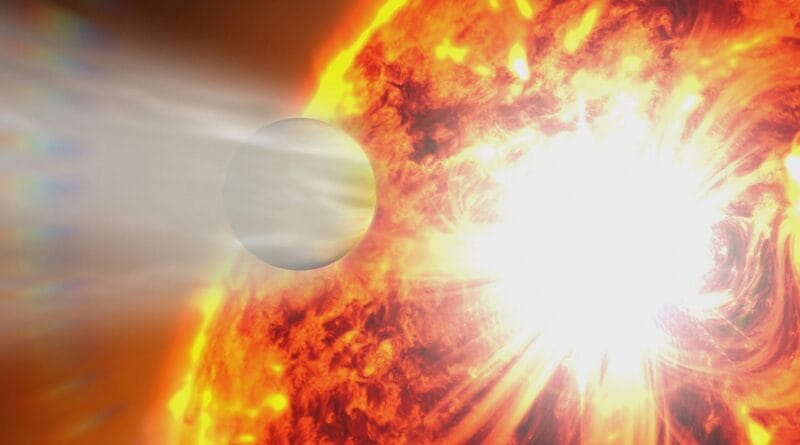
We have officially entered the peak of “Solar Cycle 25,” also known as the Solar Maximum. The Sun is currently more active than it has been in two decades, spitting out X-class solar flares at a record rate.
While the Northern Lights have been beautiful this winter, the data is worrying NASA. The probability of a “Carrington Event”—a massive geomagnetic storm capable of frying electronics—has risen to 12% for this year. The question is: Are we ready for a solar maximum 2026 internet blackout?
The “Undersea” Weakness
Most people think a solar storm would destroy satellites. While that is true, the real danger lies at the bottom of the ocean.
Our global internet relies on thousands of miles of fiber-optic cables running across the Atlantic and Pacific. The fiber itself is glass and immune to magnetic interference. However, these cables need “repeaters” every 50 miles to boost the signal. These repeaters are electronic, and they are grounded to the Earth.
A G5-class geomagnetic storm would induce massive electrical currents in the Earth’s crust. These currents would rush into the repeaters, frying them instantly.
“It wouldn’t be a temporary outage,” explains Dr. Aris K., a space weather consultant for the ESA. “If the repeaters burn out, we have to send ships to physically pull up the cables and replace them. That takes months. Imagine a world without the global internet for 3 months. The economic collapse would be instant.”
Has It Happened Before?
Yes. In 1859, the “Carrington Event” hit Earth. Telegraph wires burst into flames, and operators were shocked by their equipment. In 1989, a smaller storm knocked out the power grid in Quebec, Canada, leaving millions in the dark for hours.
The problem is that in 1859, we didn’t have a digital economy. In 2026, a similar event would cost the global economy an estimated $2 trillion per day.
The Warning Signs to Watch
Unlike an earthquake, we get a warning. A Coronal Mass Ejection (CME) takes about 18 to 36 hours to travel from the Sun to Earth.
If NASA and NOAA detect a “Cannibal CME” (where one fast wave overtakes a slower one, combining into a mega-storm), they will issue a global alert. This would give power grid operators about 24 hours to put systems into “Safe Mode” and disconnect transformers to prevent them from melting.
However, for the average citizen, this warning might come too late.
How to Prepare Your Data
Tech experts are advising a “Digital Prepping” strategy for 2026:
- Cash is King: If the internet goes down, credit card terminals and Apple Pay stop working. Keep an emergency cash fund.
- Hard Backups: Cloud storage is useless without an internet connection. Back up your essential documents and family photos to a physical hard drive and keep it in a metal box (a makeshift Faraday cage).
- Radio Communication: If cell towers lose power or synchronization, old-school AM/FM radios will be the only source of news.
Is It Inevitable?
Not necessarily. The Sun is unpredictable. We might pass through this Solar Maximum with nothing more than some static on the radio and great auroras. But the risk is higher right now than at any point in the internet age.
As we enjoy the convenience of our hyper-connected world, we must remember that it all hangs by a very thin thread, suspended over a very angry star.
For daily space weather updates and storm alerts, bookmark the official NOAA Space Weather Prediction Center.