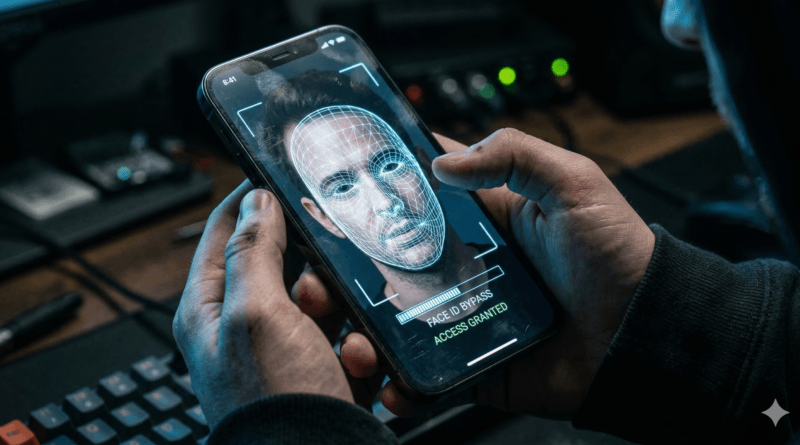
Synthetic Biometric Hacking: Why Your Face Is No Longer a Safe Password
Biometrics were sold to the public as the ultimate security solution. Tech companies promised that your fingerprint, your face, and your voice were entirely unique. They told us these biological markers could never be stolen or replicated. That promise is officially broken.
A new and highly sophisticated wave of cybercrime is currently exploiting the very technology designed to protect our personal data. The fingerprint scanner on your laptop and the facial recognition camera on your smartphone are no longer reliable barriers. Criminal networks have figured out how to use the exact same tools to unlock our most sensitive financial vaults.
How Synthetic Biometric Hacking Defeats Bank Security
Digital thieves are no longer wasting time trying to guess your mother’s maiden name or your first pet. They are actively copying your biological signature. The process relies on advanced machine learning models and data readily available on the internet.
Hackers scrape a handful of high-definition photos from your public social media profiles. They extract a short, three-second audio clip from a video you posted online months ago. They feed this raw data into a generation engine. The result is a perfect digital clone of your identity. This clone is then used to trick the active liveness checks required by modern banking applications.
Active liveness checks usually ask you to blink, smile, or turn your head to prove you are a real human holding the phone. The new cyber threat bypasses this entirely. The software maps a digital mask over the hacker’s face in real time. The smartphone camera sees you blinking. The banking app registers a positive match. The vault unlocks instantly. This synthetic biometric hacking is incredibly fast, cheap to execute, and nearly impossible to trace once the funds are moved.
The Collapse of Voice Authentication
Voice verification is failing at an even faster rate than facial recognition. Several major financial institutions and telecommunication providers have quietly disabled their telephone banking voice authentication systems this quarter. Fraudsters are routinely using cloned audio to authorize massive wire transfers over the phone.
A human customer service representative simply cannot distinguish between the real client and the digital clone. The audio generation is flawless. It perfectly mimics regional accents, slight hesitations, and even natural breathing patterns.
This level of technological disruption mirrors the physical vulnerabilities we saw during the recent drone swarm blockade. Both scenarios prove that bad actors are adapting to new technology much faster than regulatory bodies can build defenses. You can review the latest official advisories regarding identity theft and voice cloning directly on the Cybersecurity and Infrastructure Security Agency website.
Moving Back to Physical Hardware
Security experts are urging a rapid return to physical verification methods. Software can always be tricked by better software. Biological markers are now just data points that can be downloaded and replicated.
Physical hardware keys offer a tangible barrier that artificial intelligence cannot cross remotely. A dedicated encrypted USB token requires a physical button press. A hacker sitting in a basement in another country cannot physically touch the device resting on your desk. We are entering an era where the most advanced security measure is keeping your access strictly offline. The convenience of unlocking your life with a smile is no longer worth the risk.
Evaluate the security layers on your most critical applications right now. If your primary email account or your banking app relies entirely on facial recognition or an SMS text message to log in, your entire digital life is highly vulnerable.
Action Step: Disable biometric login fallbacks for your primary financial accounts today. Purchase a physical hardware security key and set it up as your only two-factor authentication method. Treat your face and your voice like public usernames, because they are no longer secret passwords.